Dusky Watercolor Space Backgrounds: A Designer's Guide
There’s a particular challenge in digital design when you need a backdrop that feels both cosmic and organic. We often see space themes rendered in sharp, high-contrast vectors or hyper-realistic 3D renders. But what if your project calls for something softer? Something that feels hand-painted yet vast? This is where the Dusky Watercolor Space Backgrounds Pack finds its niche. It bridges the gap between the infinite expanse of the universe and the tangible, imperfect beauty of watercolor art. For designers, marketers, and creators looking to add a layer of depth and emotion to their work, this collection offers a distinct visual language that’s difficult to replicate with standard tools.
Visual Style and Personality
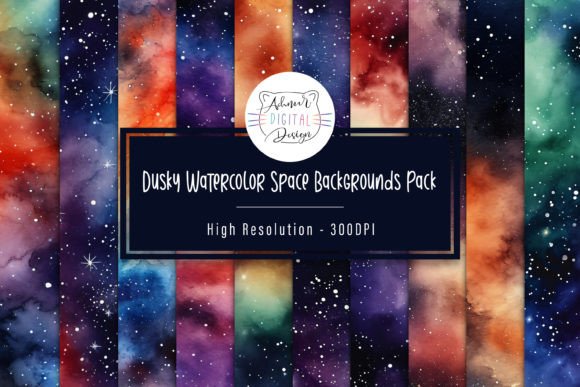
At its core, the Dusky Watercolor Space Backgrounds Pack is about atmosphere. The “dusky” descriptor is key. These aren’t bright, neon-infused nebulae. Instead, imagine deep indigos, muted purples, dusky blues, and soft, smoky grays blending into one another. The watercolor effect introduces subtle texture—soft edges where colors bleed into each other, gentle granulation that mimics real pigment on paper, and occasional lighter washes that suggest distant stars or galactic dust. The overall personality is introspective, elegant, and slightly mysterious. It feels less like a technical illustration and more like an artist’s interpretation of the cosmos.
This style carries a specific emotional weight. It can evoke a sense of calm wonder, creative inspiration, or sophisticated mystery. Because the textures are organic, they add a human touch to digital spaces. In a world saturated with clean, flat design, these backgrounds offer a welcome tactile quality. They’re not just a color fill; they’re a story in themselves, providing a rich canvas that can elevate any foreground element placed upon them.
Strategic Applications Across Projects
Understanding where the Dusky Watercolor Space Backgrounds Pack works best is about matching its personality to your project’s goals. In brand identity and logo design, these backgrounds can serve as a foundational mood-setter. For a boutique astrology service, a meditation app, or a high-end creative agency, using one of these as a website hero image or a presentation slide backdrop immediately communicates depth and artistry. It tells the audience, “We value beauty and substance.”
For marketing and social media graphics, the pack is incredibly versatile. Think of Instagram posts for a poetry account, Facebook ads for a sci-fi novel launch, or Pinterest pins for a DIY celestial craft project. The muted, dusky tones provide excellent contrast for both serif fonts and sans serif fonts. A clean modern typography choice in white or a light metallic can pop beautifully against this textured canvas, ensuring your message isn’t lost. In editorial design, such as magazine layouts or book covers, these backgrounds can create striking chapter title pages or set a contemplative tone for feature articles on topics from science to spirituality.
Even in packaging design, particularly for products like artisanal candles, luxury skincare, or specialty teas, a subtle use of this background on a box sleeve or label can add perceived value and a unique shelf presence. The key is to use it as a supporting actor, not the main event, allowing the product itself to remain the focus.
Practical Integration and Design Considerations
Simply having a beautiful asset isn’t enough; effective use requires thoughtful integration. The first step is evaluating project fit. Does your brand’s voice align with the ethereal, artistic quality of the watercolor space? A fintech startup might find it too whimsical, while a music producer or an author could find it perfect. Always test the background with your actual content—your logo, your headline fonts, your key imagery. See how the visual hierarchy holds up.
This leads to font pairing. The organic texture of the backgrounds pairs exceptionally well with structured typefaces. A bold display font for a headline can anchor the design, while a clean script font or handwritten font for a subheading can echo the artistic quality without competing. However, for body text, readability is paramount. Avoid overly decorative script fonts for long paragraphs. Instead, opt for a highly legible sans serif font or a classic serif font at a comfortable size and with sufficient color contrast. Remember, the background is textured, so simplicity in your text elements is your friend.
From a technical standpoint, the files are provided as high-resolution (300 DPI) JPEGs. This makes them ideal for both digital and print projects. For web use, you may need to optimize the file size without sacrificing too much quality to ensure fast page loads. For print, the high resolution ensures the beautiful watercolor textures remain crisp and detailed. The fact that they come in a clean, zipped file makes organization straightforward. As with any design assets, always double-check the specific license terms for commercial use to ensure it covers your intended application, whether it’s for a client project or your own product line.
Final Thoughts on Creative Potential
The true value of a resource like the Dusky Watercolor Space Backgrounds Pack lies in its ability to inspire. It’s not just a static image; it’s a starting point. A designer might use one as a base for a digital collage, layering other elements over it. A content creator could use it as a unique background for product photography or video thumbnails. The subtle, non-uniform nature of watercolor means each background feels one-of-a-kind, which can help your projects stand out in a crowded digital landscape.
Ultimately, incorporating these backgrounds is about making a deliberate choice to add warmth, texture, and a sense of human craftsmanship to your work. In the endless sea of generic gradients and stock photos, this pack offers a cohesive and emotionally resonant alternative. It’s a tool for building brand recognition through consistent, high-quality visuals and for engaging an audience that appreciates thoughtful design. By understanding its strengths and applying it with intention, you can transform a simple design into something that feels both cosmic and deeply personal.